
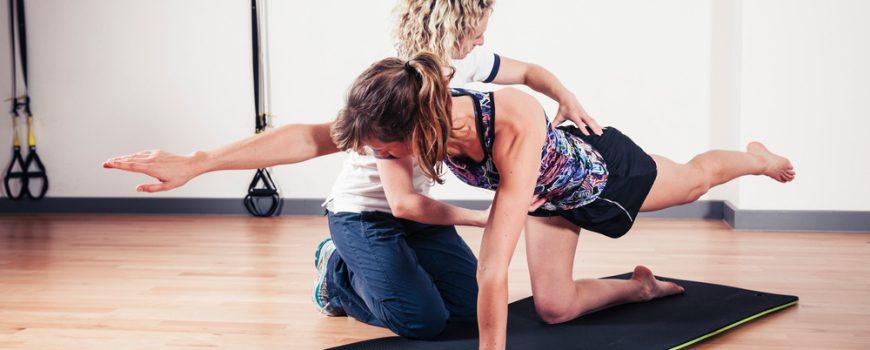
PILATES & CHIROPRACTIC
Combining chiropractic care and Pilates is increasingly used in rehabilitation and wellness programs because each method addresses different aspects of musculoskeletal health. Chiropractic focuses on spinal alignment and joint mobility, while Pilates focuses on strength, stability, and movement control. Together they create a complementary approach that can improve posture, reduce pain, and support long-term physical function.
Below is a summary of the key benefits supported by articles and research sources.
Benefits of Combining Chiropractic and Pilates
1. Improved Posture and Spinal Alignment
Chiropractic adjustments help restore proper spinal alignment, while Pilates strengthens the muscles that keep the spine stable. This combination helps maintain correct posture in everyday activities.
· Chiropractic care realigns joints and reduces spinal dysfunction.
· Pilates strengthens core muscles (abdominals, back, pelvic floor) that support the spine.
Research and clinical articles note that strengthening these muscles helps maintain the corrections achieved through chiropractic adjustments and improves long-term posture.
2. Stronger Core Stability
Pilates emphasizes controlled movements and core engagement, which helps stabilize the spine and pelvis.
Benefits include:
· Increased core strength
· Better muscle balance
· Reduced strain on the spine
These improvements support chiropractic treatments because stronger stabilizing muscles help prevent the spine from returning to misaligned positions.

3. Reduced Pain and Faster Recovery
Both therapies aim to reduce musculoskeletal pain.
· Chiropractic adjustments can relieve back pain, neck pain, and headaches by improving joint mobility.
· Pilates improves movement patterns and strengthens weakened muscles.
Studies show chiropractic interventions can provide short-term improvement in pain and disability in people with low back pain.
When Pilates exercises are added, patients often experience:
· improved mobility
· decreased muscle tension
· reduced recurrence of pain episodes.
4. Injury Prevention and Rehabilitation
Pilates is widely used in injury rehabilitation because it uses low-impact, controlled movements.
Combined benefits include:
· improved joint stability
· increased flexibility and balance
· reduced risk of re-injury.
Clinical Pilates programs are frequently used alongside chiropractic treatment during recovery from injuries or surgery.
5. Improved Flexibility and Mobility
Chiropractic adjustments help restore joint movement, while Pilates maintains and improves flexibility through stretching and controlled movement.
Together they can:
· improve range of motion
· reduce stiffness
· enhance overall body mechanics.
Pilates emphasizes mind-body connection and controlled breathing, which improves body awareness.
This helps individuals:
· recognize poor posture habits
· correct movement patterns
· prevent future misalignment.
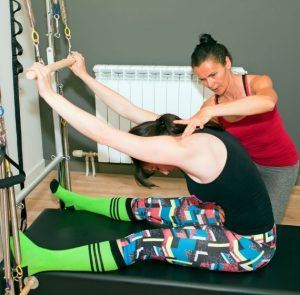
The literature suggests that chiropractic care and Pilates offer complementary benefits for musculoskeletal rehabilitation. Chiropractic adjustments address structural alignment and joint mobility, while Pilates strengthens the muscular system that supports the spine.
Integrating both approaches may improve posture, reduce pain, enhance core stability, and support long-term spinal health. While existing evidence supports the benefits of each therapy individually, more high-quality studies are needed to evaluate the effectiveness of combined treatment programs.
APA Reference List
Chen-Ya Yang, C., Tsai, Y.-A., Wu, P.-K., Ho, S.-Y., Chou, C.-Y., & Huang, S.-F. (2021). Pilates-based core exercise improves health-related quality of life in people living with chronic low back pain: A pilot study. Journal of Bodywork and Movement Therapies, 27, 294–299. https://doi.org/10.1016/j.jbmt.2021.03.006
Lauche, R., Sundberg, T., & Cramer, H. (2017). Spinal manipulative therapy for low back pain. JAMA, 318(9), 824–825.
Paige, N. M., Miake-Lye, I. M., Booth, M. S., Beroes, J. M., Mardian, A. S., Dougherty, P., … & Shekelle, P. G. (2017). Association of spinal manipulative therapy with clinical benefit and harm for acute low back pain: Systematic review and meta-analysis. JAMA, 317(14), 1451–1460. https://doi.org/10.1001/jama.2017.3086
Rubinstein, S. M., Terwee, C. B., Assendelft, W. J. J., de Boer, M. R., & van Tulder, M. W. (2019). Benefits and harms of spinal manipulative therapy for the treatment of chronic low back pain: Systematic review and meta-analysis of randomized controlled trials. BMJ, 364, l689. https://doi.org/10.1136/bmj.l689
Wells, C., Kolt, G. S., & Bialocerkowski, A. (2012). Defining Pilates exercise: A systematic review. Complementary Therapies in Medicine, 20(4), 253–262.
Yamato, T. P., Maher, C. G., Saragiotto, B. T., Hancock, M. J., Ostelo, R. W., Cabral, C. M., & Costa, L. O. P. (2015). Pilates for low back pain. Cochrane Database of Systematic Reviews, 2015(7), CD010265.
Cruz-Díaz, D., Bergamin, M., Gobbo, S., Martínez-Amat, A., & Hita-Contreras, F. (2017). Comparative effects of 12 weeks of equipment-based and mat Pilates in patients with chronic low back pain on pain, function and transversus abdominis activation. A randomized controlled trial. Complementary Therapies in Medicine, 33, 72–77.
Miyamoto, G. C., Costa, L. O. P., & Cabral, C. M. N. (2013). Efficacy of the Pilates method for pain and disability in patients with chronic nonspecific low back pain: A systematic review with meta-analysis. Brazilian Journal of Physical Therapy, 17(6), 517–532.